Sempervirens Fund logo Little Basin, photo by Dan Quinn
Boy and Redwood Tree, Photo by Doug YuleBranch from Sequoia sempervirens

About Coast Redwoods

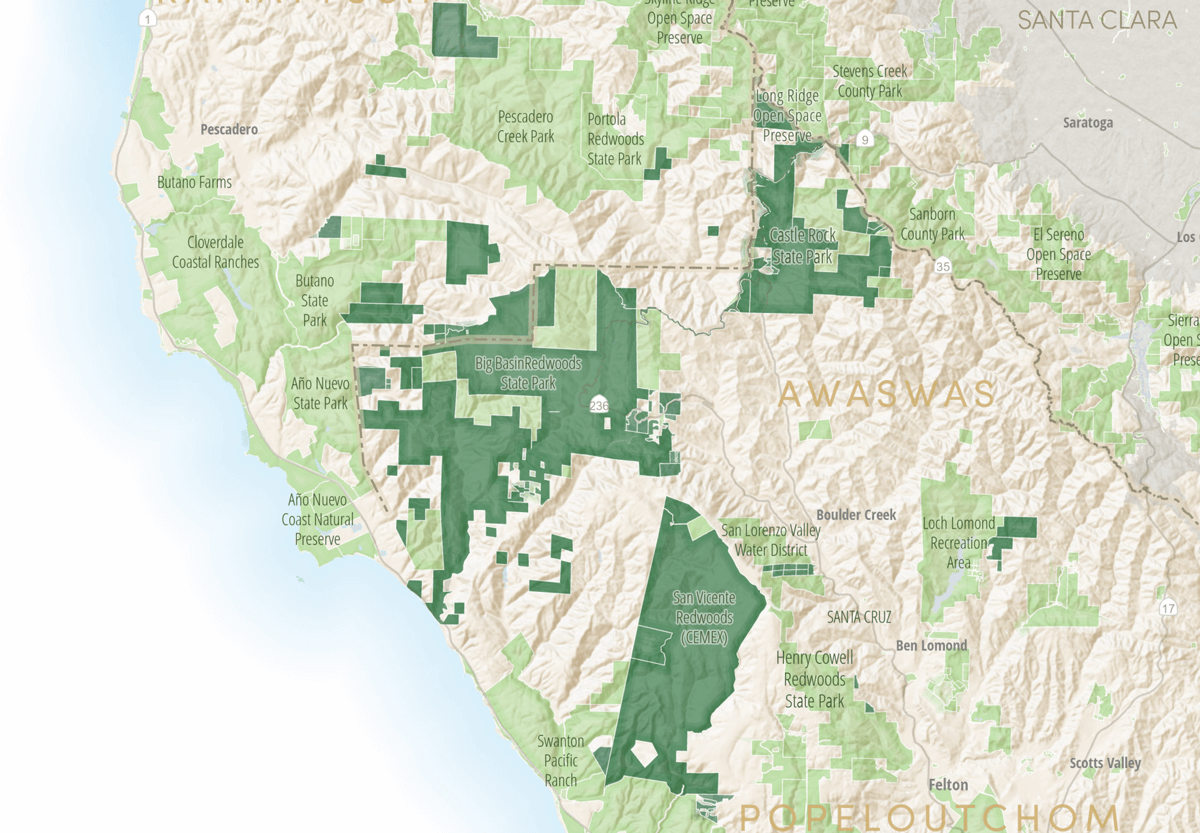
Sempervirens Fund and our donors are passionate about protecting the redwood forests of the Santa Cruz Mountains. Here’s why:

  • Coast redwoods provide critical habitat. The coast redwoods are home to a diversity of wildlife dependent on the forest. Perhaps most well-known is the endangered marbled murrelet, a small seabird species that lays its eggs up to 50 miles inland in the tops of old-growth redwood and Douglas fir trees. As our global climate changes, biologists consider the Santa Cruz Mountains one of only a handful of areas that can provide a refuge for plants and animals to survive because the region is largely undeveloped, has many microclimates, and is cooled by coastal fog.
  • Coast redwoods are leading the way in the fight to protect the earth’s climate. Redwood trees naturally sequester massive amounts of carbon each year. In fact, some studies suggest that the California coast redwood captures more carbon dioxide than any other tree on earth. Moreover, scientific evidence indicates that older redwood forests under a management regime of preservation sequester much higher amounts of carbon than those forests that are younger and are subjected to regular timber harvests. This makes redwood forest protection even more important to any overall strategy to stabilize atmospheric carbon dioxide concentrations.
  • Coast redwoods are a unique natural wonder. At one point in history redwoods could be found throughout the northern hemisphere. Today, the coast redwood naturally achieves its majestic heights and lush groves only in one place in the world — along the Pacific coast from southern Oregon to Big Sur, just south of Monterey Bay. The coast redwoods have only two close relatives: the shorter but more massive giant sequoia (Sequoiadendron giganteum), which grows only in California’s Sierra Nevada Mountains, and the deciduous dawn redwood (Metasequoia glyptostroboides), a veritable midget at 115 feet in height, which is found native only in a remote area of central China.
  • Coast redwoods are the tallest living species on the planet. Redwoods can exceed 300 feet in height, and may be 18-20 feet in diameter, reaching nearly 12 feet above the ground. More than a dozen trees exceeding 360 feet in height are now growing along the California coast.
  • Coast redwoods are ancient. Redwood trees have been around for more than 240 million years. The oldest verified living redwood is at least 2,200 years of age, but foresters believe that some may be much older.
  • Coast redwoods are a refuge. The coast redwoods of the Santa Cruz Mountains provide a place for solace and reflection for people, and especially for the eight million people who live in the San Francisco Bay Area.
  • Coast redwoods are in trouble. Already 95% of the old-growth coast redwoods have been cut down and the remaining forests still face relentless threat from subdivision and development. Permanent federal safeguards were enacted in 2000 to ban logging of the giant Sequoia redwoods growing high in California’s Sierra Nevada Mountains. But there are no comparable federal or state safeguards for the magnificent coast redwoods!

Please help us to protect the remaining coast redwoods today!

© 2010 Sempervirens Fund.  Site last modified August 30, 2010. site map | privacy policy | contact